❋
Building a Generative AI Tool for Transactional Insights
Intro
Exploring transactional data at Visa required navigating complex datasets and predefined dashboards, making it difficult for users to quickly surface insights or answer ad-hoc questions.
This project focused on designing a secure, AI-powered interface that enables users to explore transactional data through natural language — reducing friction in data access while maintaining trust and control.
My role
As the lead UX designer, I owned the end-to-end design of the AI experience.
I worked closely with product and engineering to define interaction patterns for a new AI-driven interface, and partnered with UX research to understand user behavior around data exploration and validate early concepts.
Given the lack of established patterns for AI in this space, I helped shape how users interact with conversational interfaces while ensuring the experience aligned with financial data constraints and trust requirements.
❋ Designing without established patternsUnlike traditional dashboards, there were no clear UX standards for AI-driven data exploration, requiring us to define new interaction models from scratch.
❋ Ambiguity in user intentUsers often didn’t know what to ask or how to phrase queries, making it difficult to design for consistent and predictable interactions.
❋ Trust and reliability of AI outputsIn a financial context, users need to understand and trust the results. Opaque or overly abstract responses risk reducing confidence in the tool.
❋ Managing complexity of data outputsAI-generated responses can become overwhelming if not structured properly, especially when dealing with large datasets.
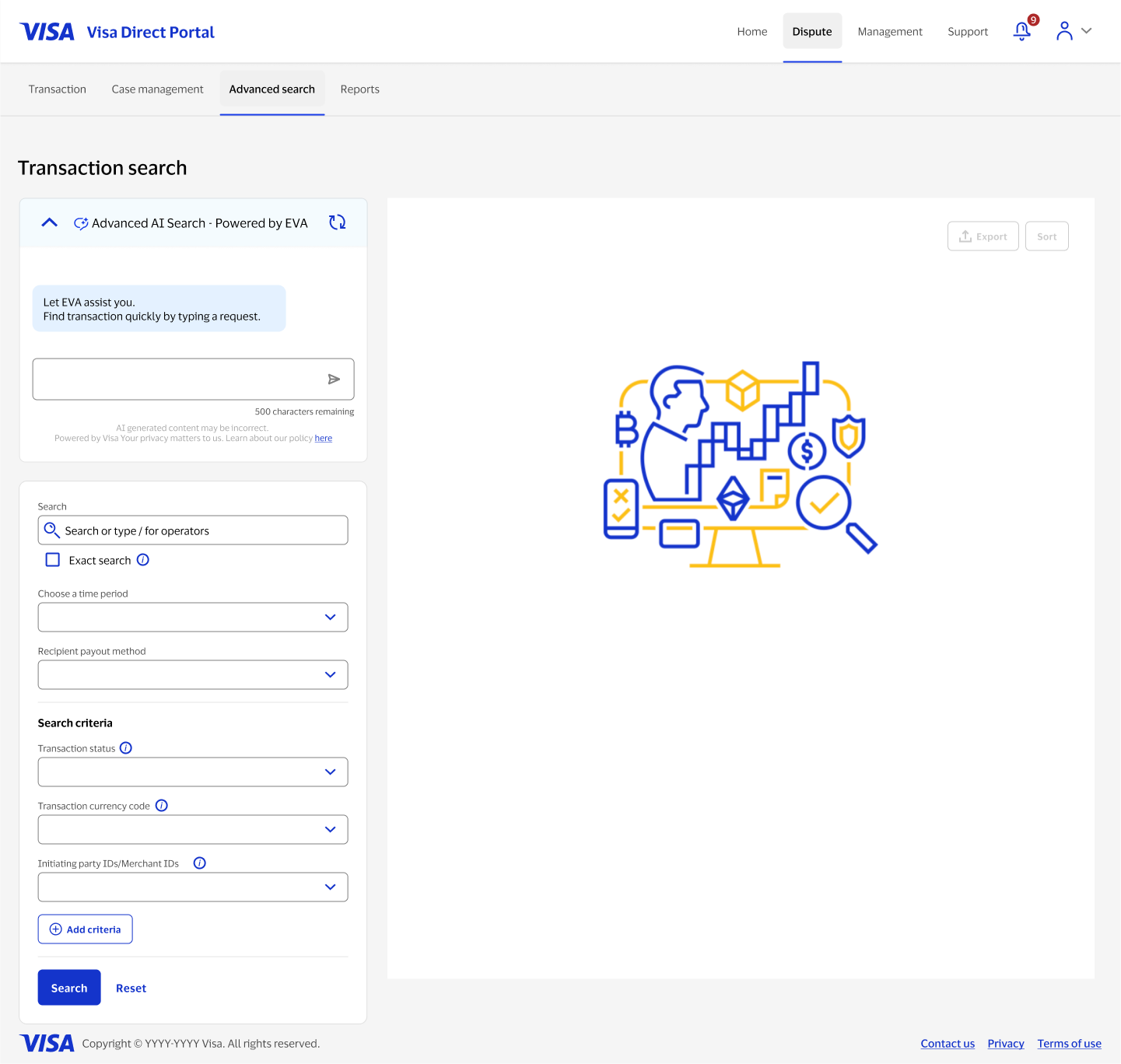
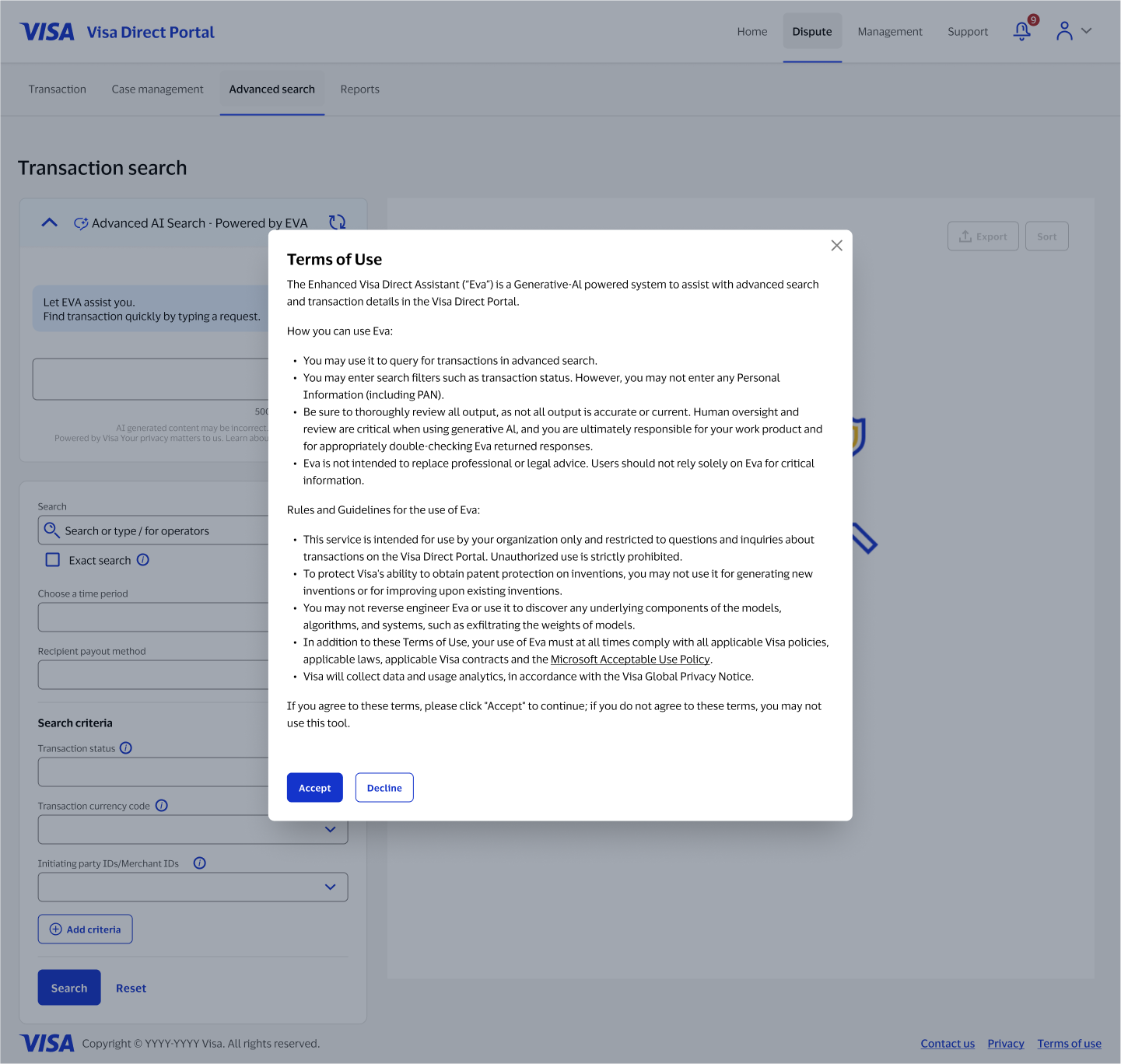
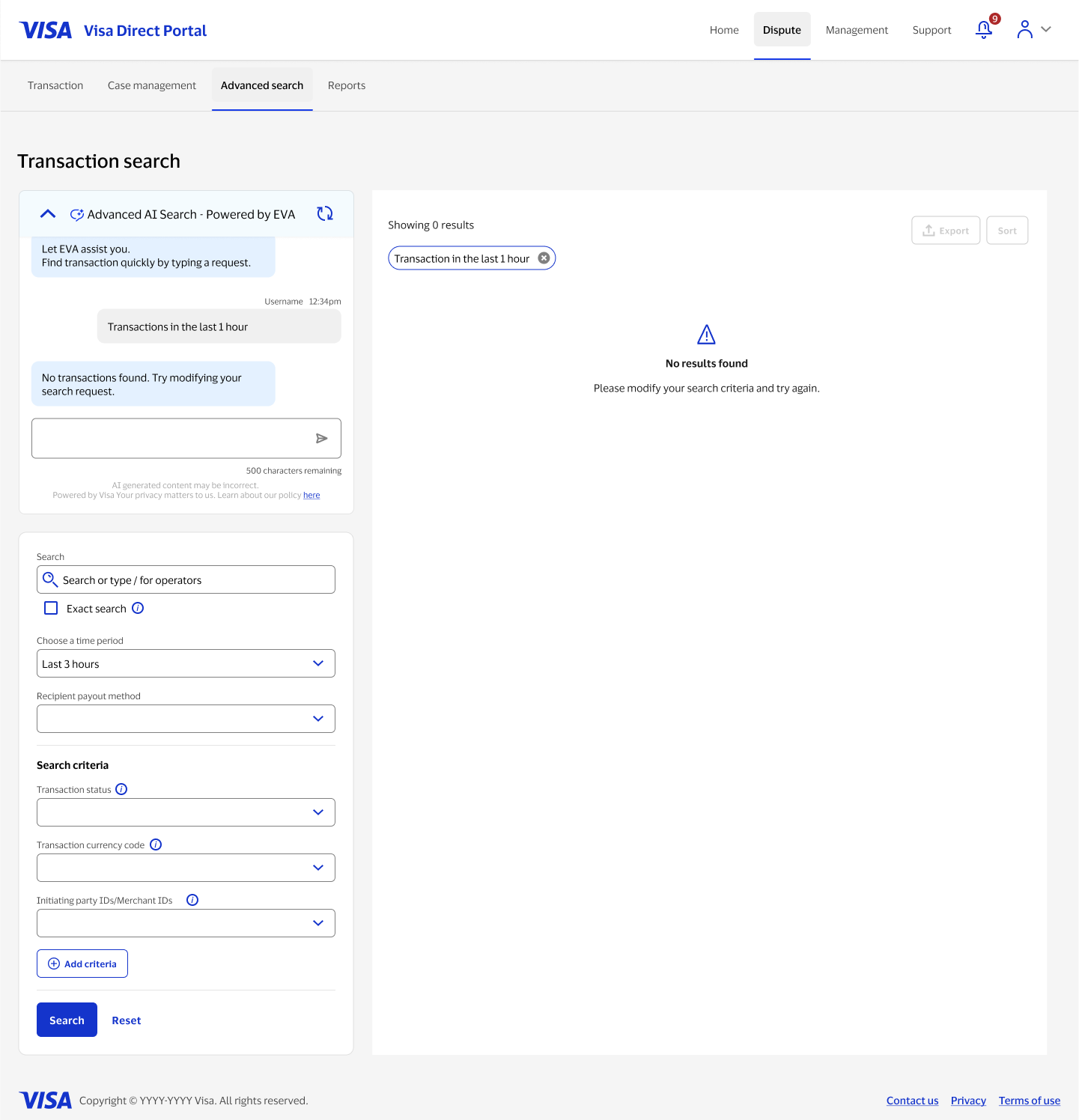
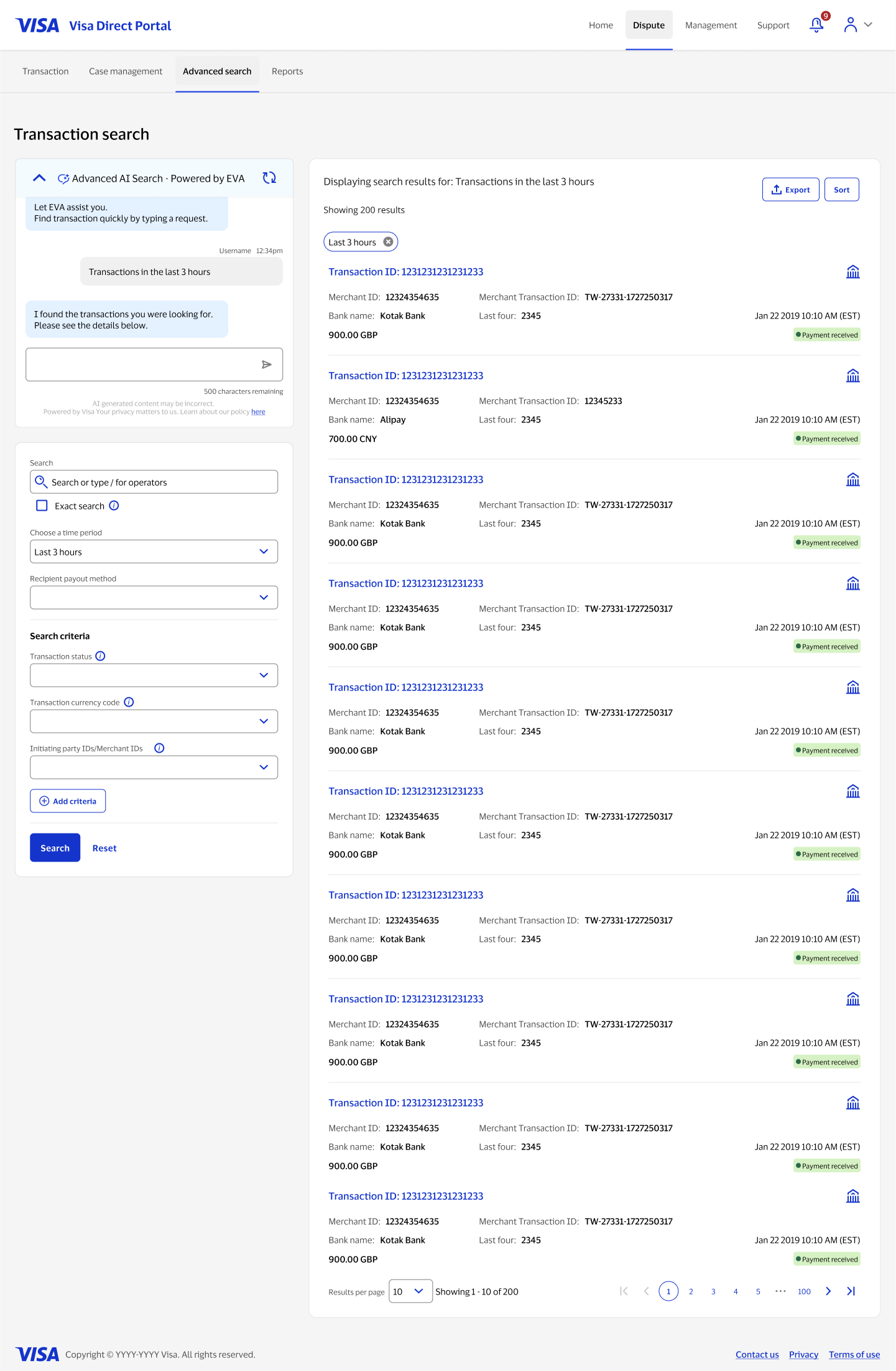
Designed a guided AI experience that supports exploration while maintaining clarity and control.
Challenges
Solution
Key decisions in the experience
Guided entry points instead of blank states
Introduced suggested prompts and structured starting points to help users quickly understand what they can ask and reduce friction in getting started.
Structured and layered outputs
Organized AI responses into clear sections, starting with high-level summaries and allowing users to drill into detailed data when needed.
Transparency in how results are generated
Surfaced key data points and connections between inputs and outputs to help users understand and trust the results.
Iterative interaction model
Enabled users to refine and adjust queries, supporting a more natural exploration process rather than expecting perfect inputs upfront.
The AI tool enabled faster and more flexible access to transactional insights, reducing reliance on static dashboards and predefined reports.
It also introduced a new interaction model for data exploration within the organization, laying the foundation for future AI-driven experiences while maintaining trust and usability in a sensitive financial domain.