❋
Creating a Value Calculator for Financial Decision-Making
Intro
Building a business case at Visa required navigating complex financial models, fragmented inputs, and manual calculations, making it difficult for teams to clearly articulate value to clients.
This project focused on designing a net-new value calculator that transforms complex financial logic into a structured, guided experience, enabling users to build, validate, and communicate business cases with clarity and confidence.
My role
As the lead UX designer, I owned the end-to-end design of the value calculator from concept to delivery.
I worked closely with product and engineering to define the structure of the experience, translating complex financial logic into a step-by-step flow.
I also partnered with stakeholders to align on how value should be modeled and presented, and collaborated with UX research to validate usability and ensure the experience worked for users with different levels of expertise.
❋ No existing product or interaction modelOnboarding was spread across Excel sheets, PDFs, and disconnected forms owned by different teams, leading to duplicated data entry and no single source of truth.
❋ Complex financial modelsIncomplete or incorrect submissions resulted in repeated communication between issuers and internal teams, slowing down onboarding and increasing effort on both sides.
❋ Structuring an inherently non-linear problemBuilding a business case involves multiple paths (new vs existing customer, different products, different value drivers), making it difficult to create a clear and guided flow.
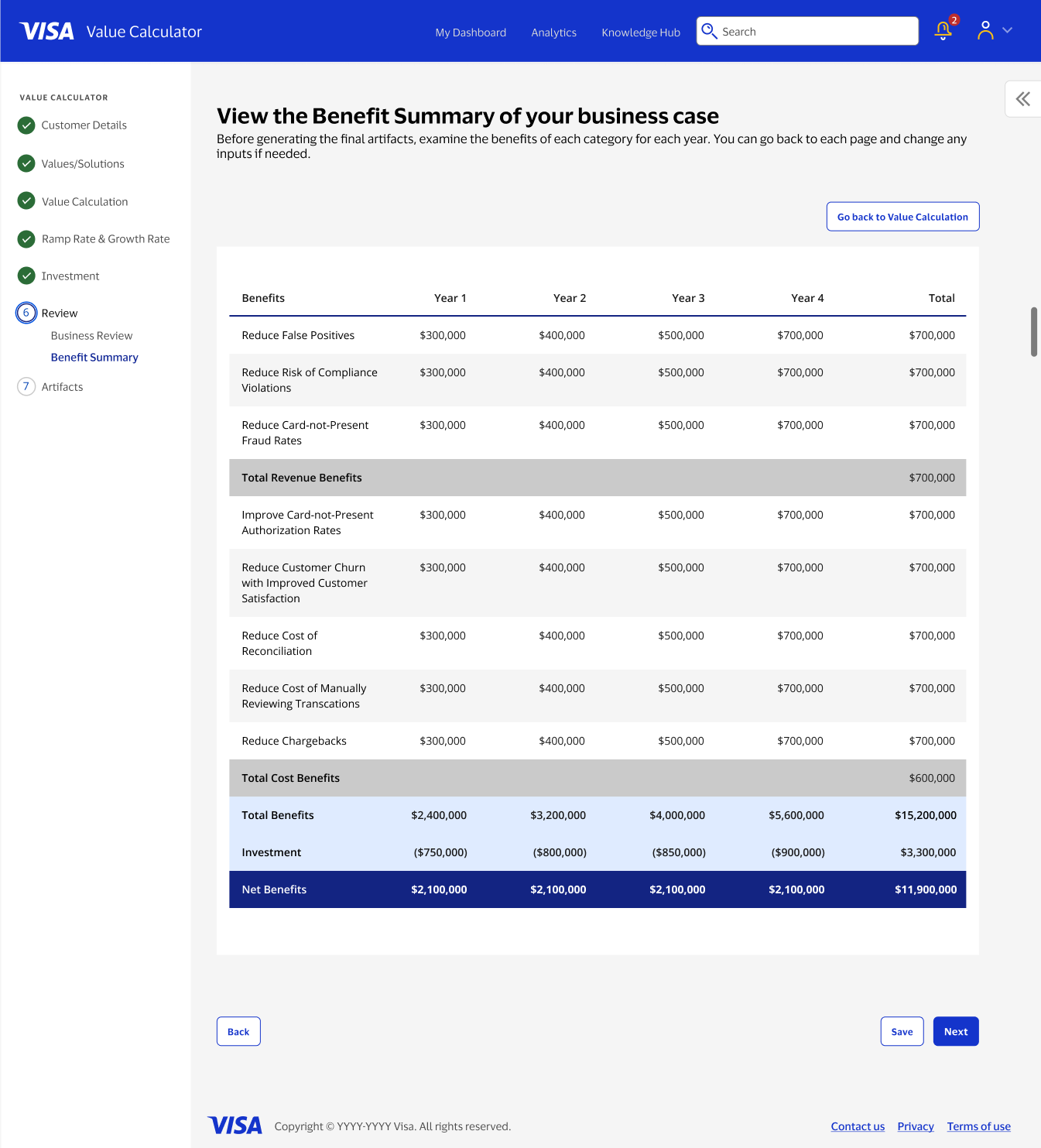
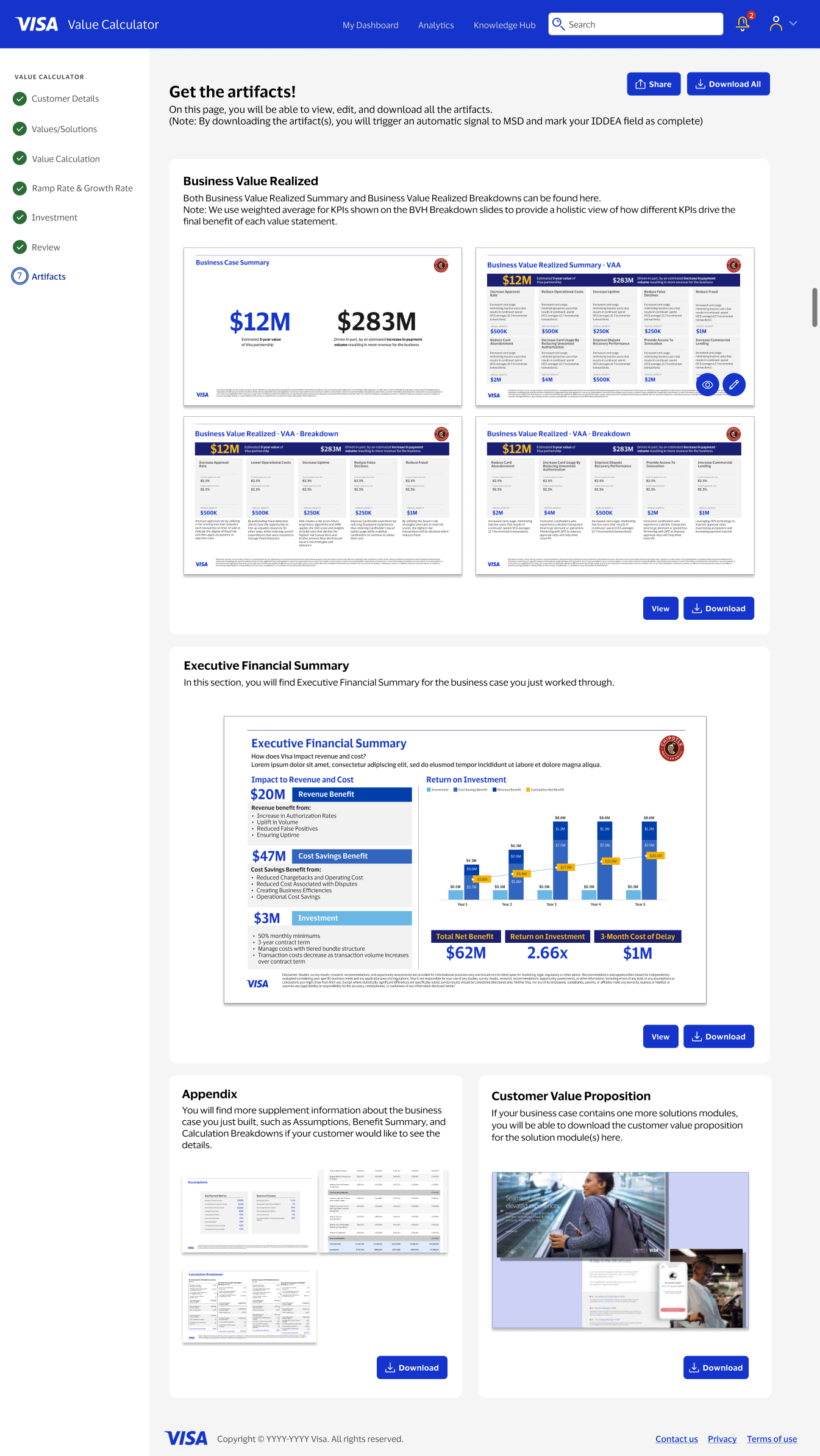
❋ Making outputs understandable and actionableCalculated results needed to clearly show value while still being transparent enough for users to trust and explain them to stakeholders.
Designed a structured, step-by-step experience that guides users from inputs to outcomes while supporting flexible business case creation.
Challenges
Solution
Key decisions in the experience
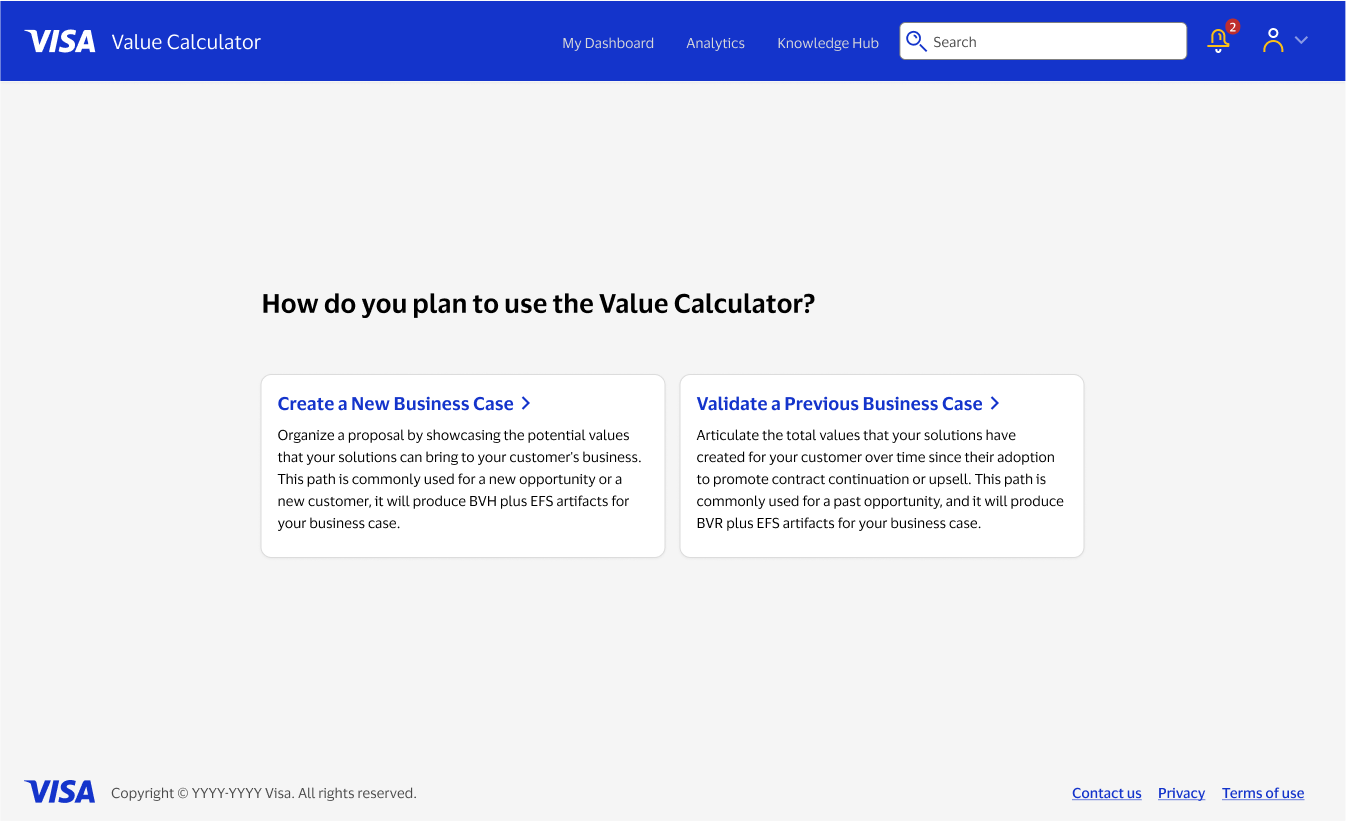
Clear entry points based on user intent
Instead of forcing a single flow, I introduced two clear paths, creating a new business case or validating an existing one, helping users quickly orient themselves based on their goal.
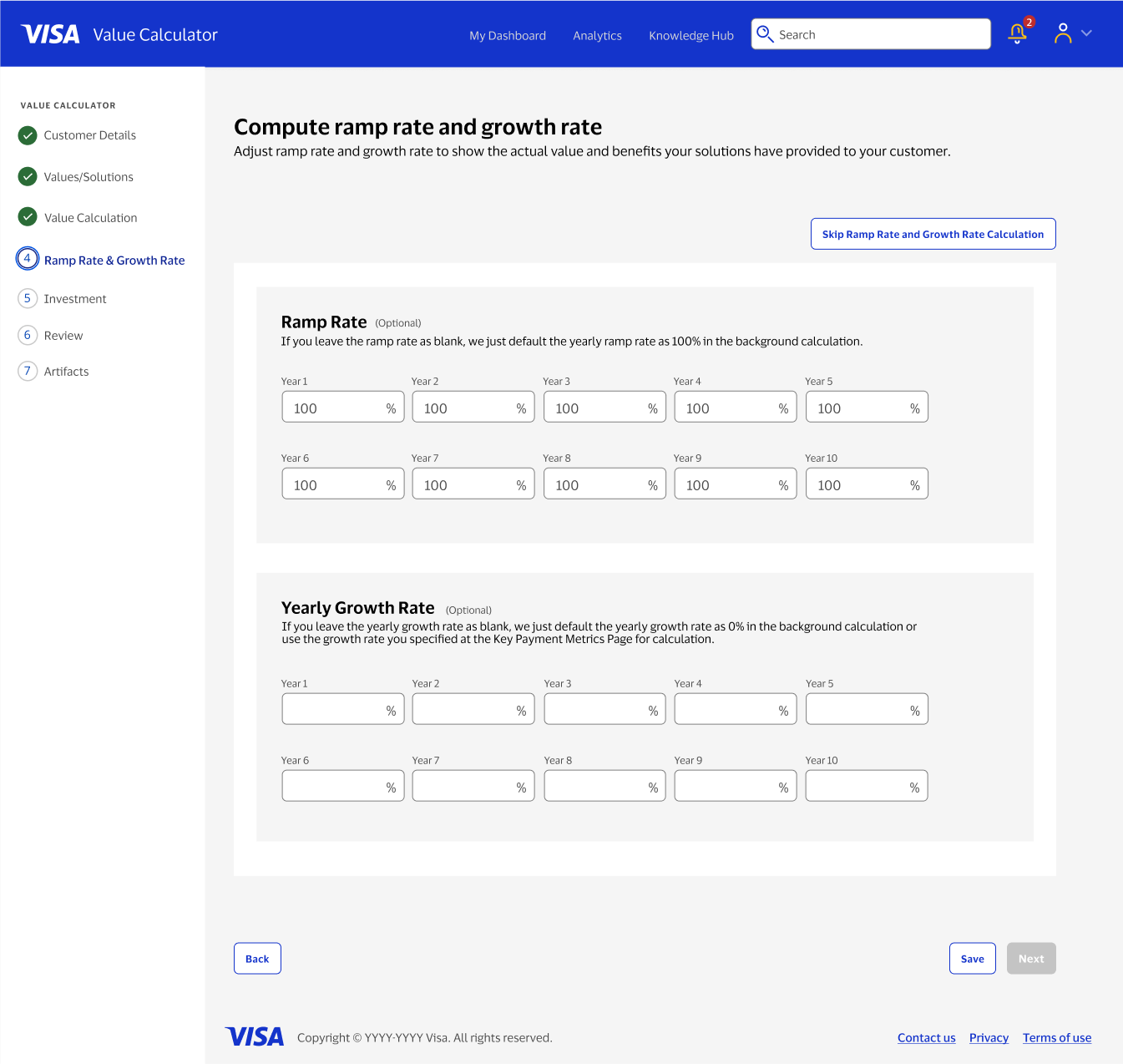
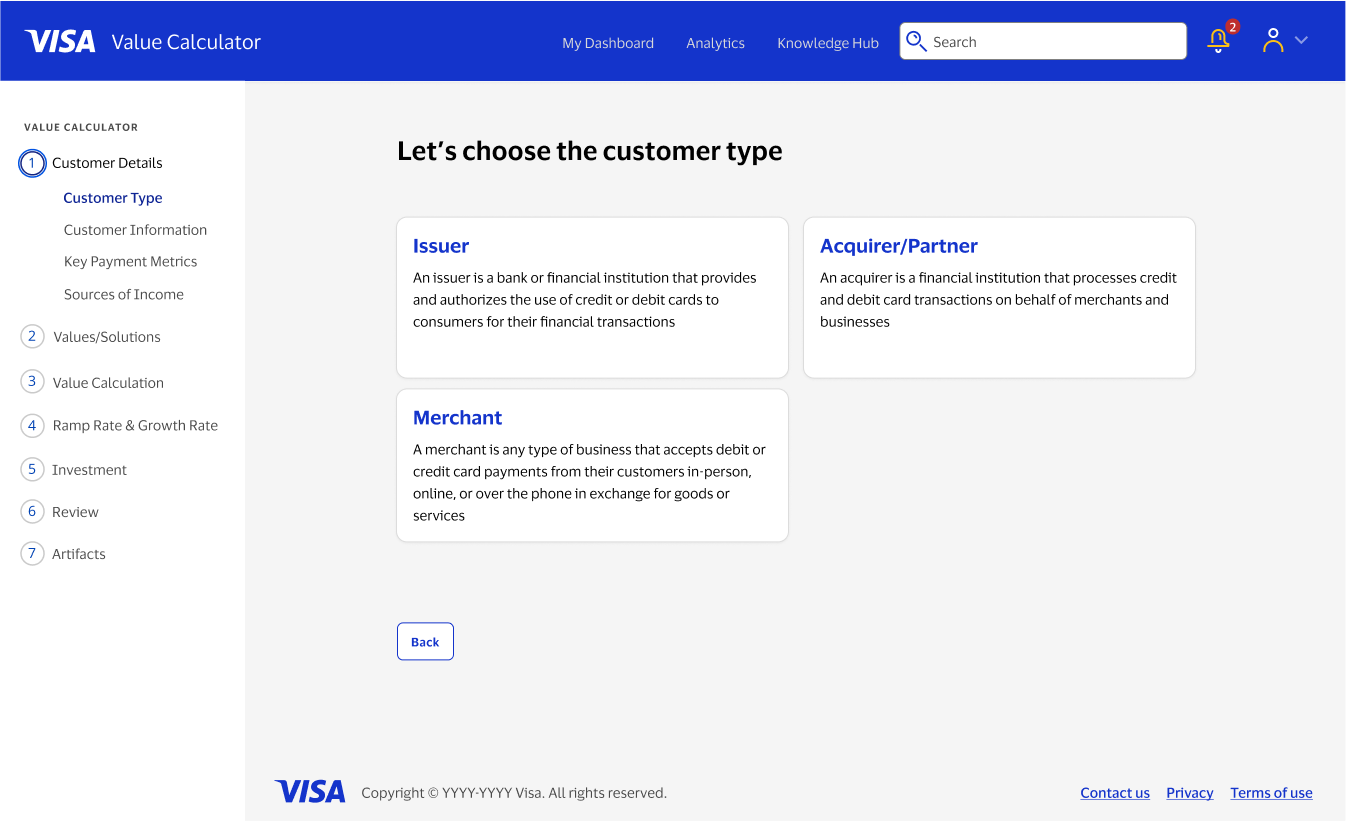
Guided flow with progressive steps
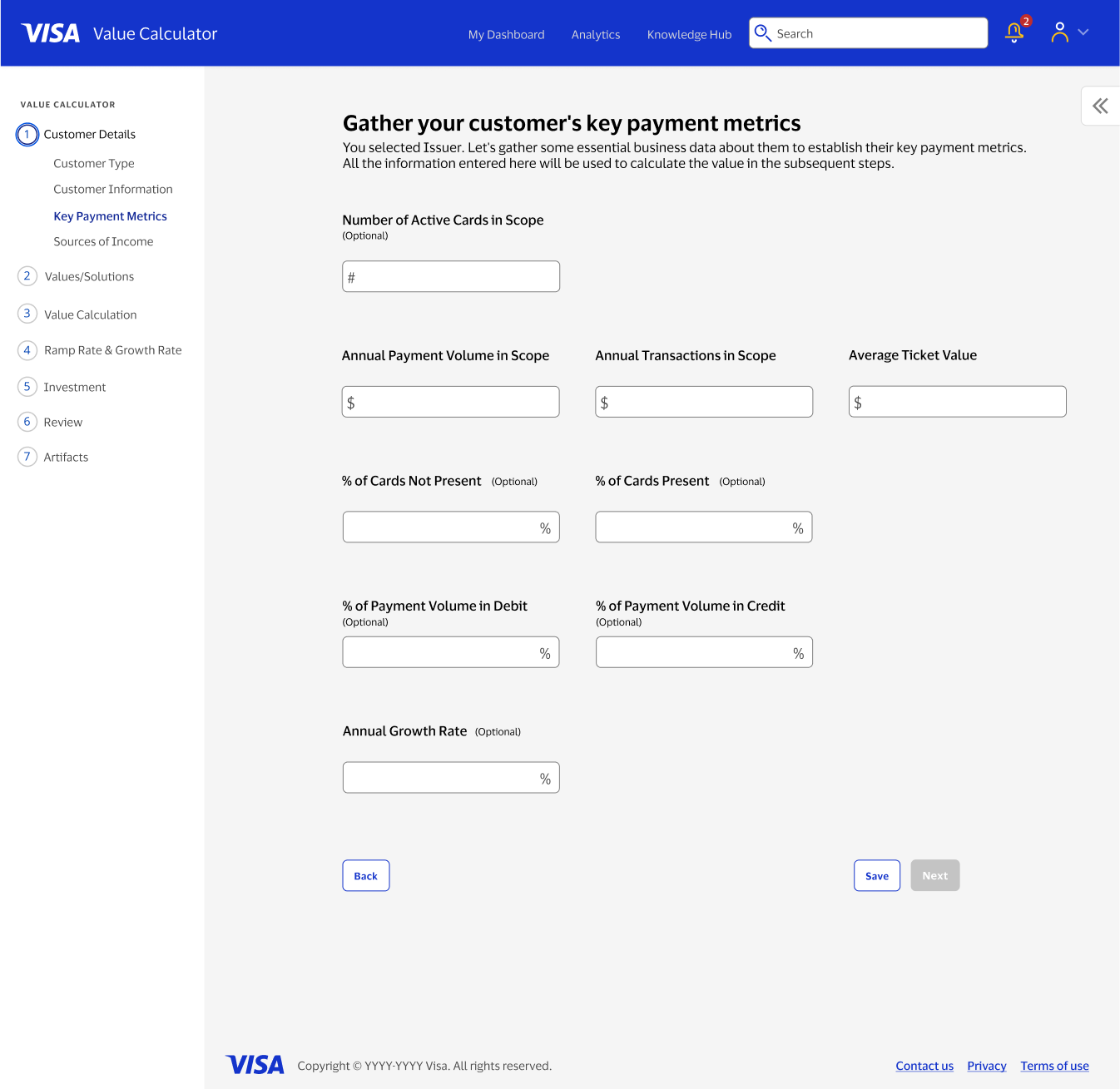
Broke down the experience into structured steps (customer details, values, calculation, investment, etc.), allowing users to move through complex inputs in a controlled and understandable way.
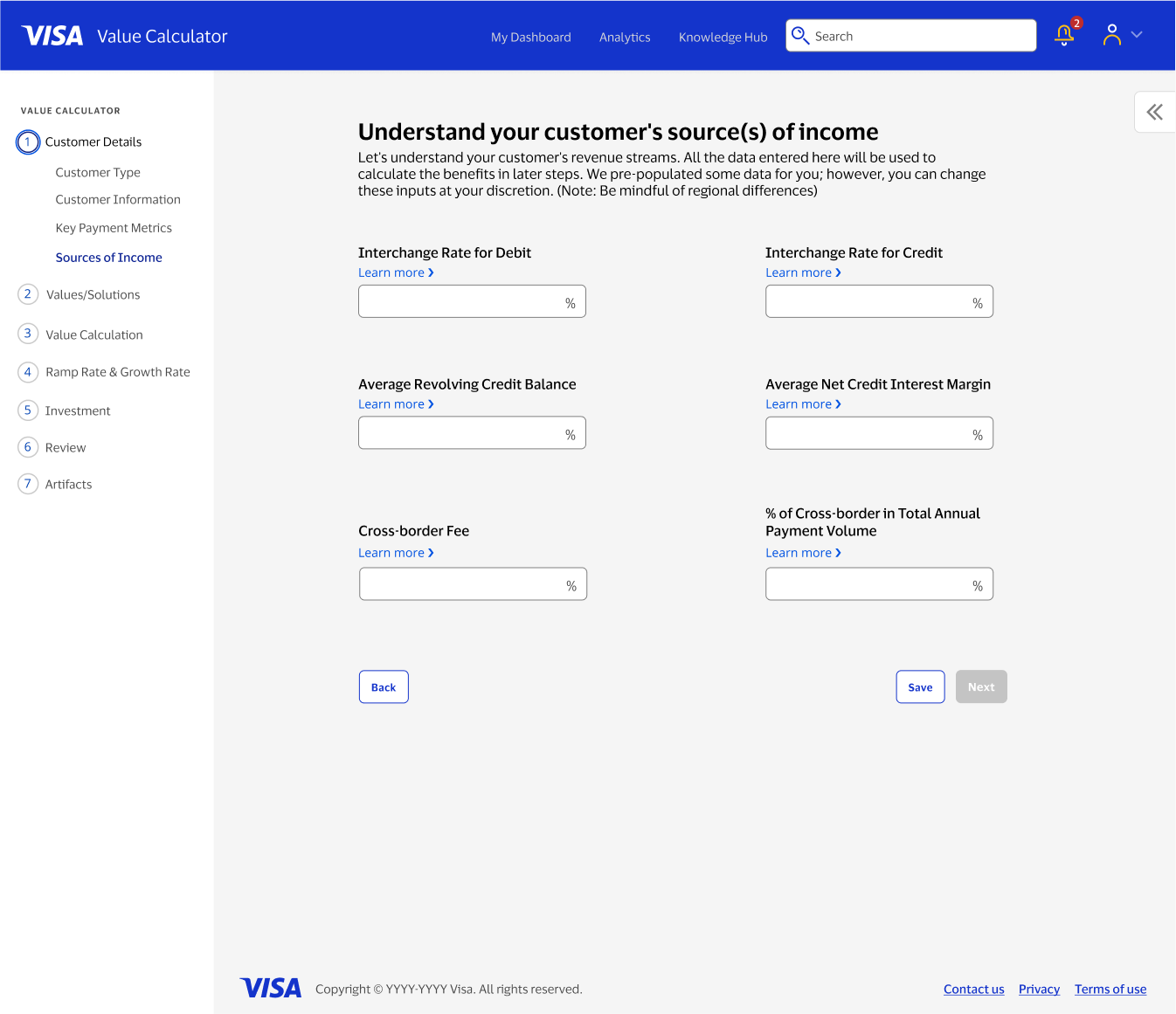
Simplified input of complex metrics
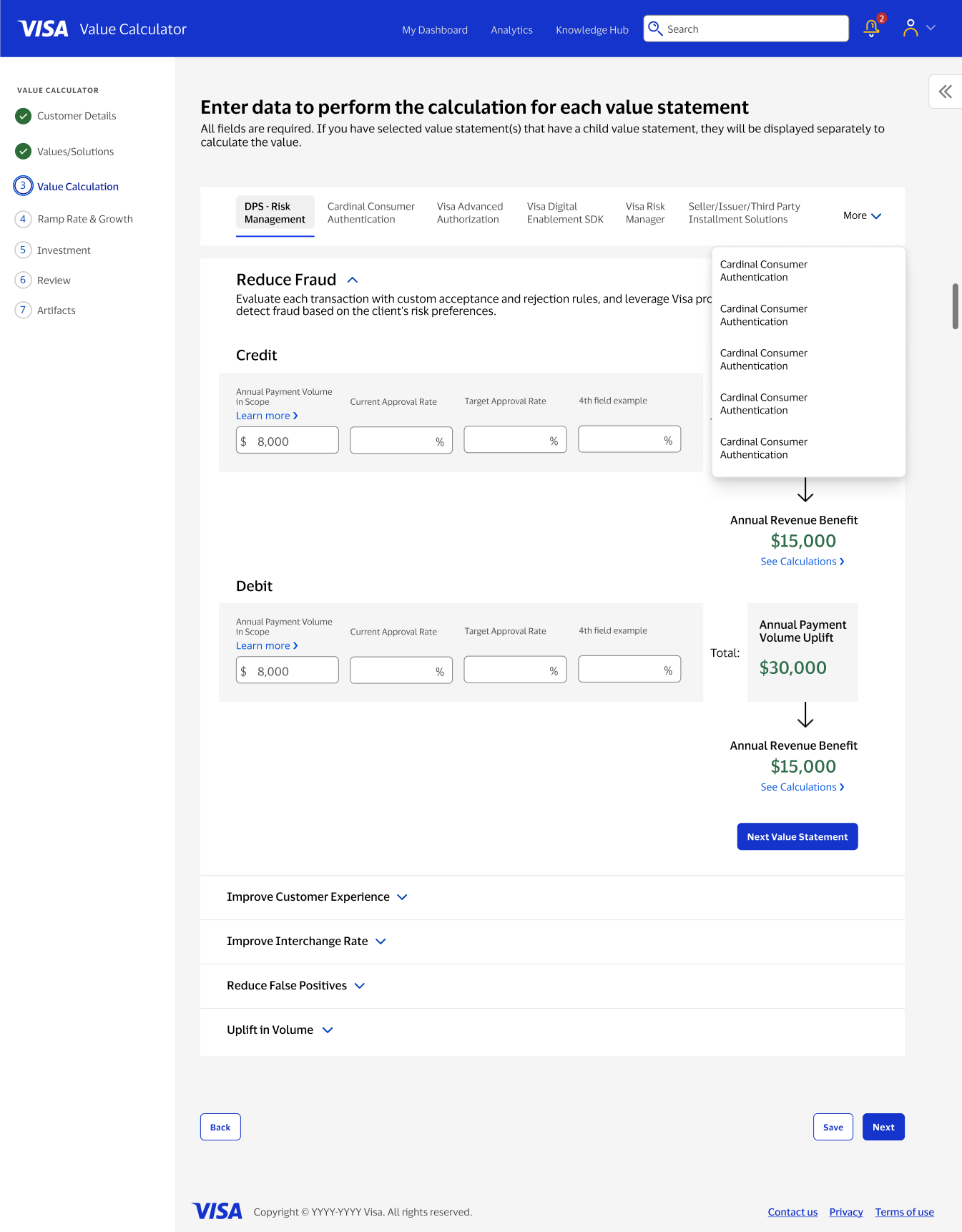
Grouped related financial inputs (e.g. payment volume, transaction mix, revenue drivers) into logical sections, making complex data easier to input and reason about.
Supporting multiple paths to build value
Designed flexible pathways where users can either start from value statements or specific solutions, accommodating different ways teams approach building a business case.
Connecting inputs to outcomes
Structured the calculation view to clearly show how inputs translate into outputs, helping users understand and communicate the resulting value.
The value calculator transformed a complex, manual process into a structured and scalable product experience, enabling teams to build and communicate business cases more efficiently.
It reduced reliance on manual calculations, improved clarity of financial outputs, and created a foundation for future decision-support tools within the platform.